At Eagle Gate College, the Bachelor of Science in Nursing (BSN) program is built to transform dedication into professional nursing leadership. Anchored in Caritas values, the curriculum integrates compassionate care with rigorous clinical preparation. The first four semesters are offered online in an asynchronous format, enabling students to progress through foundational coursework with flexibility. General education courses are available every eight weeks, while the core nursing sequence begins once each year in a structured format. Students participate in supervised clinical rotations across varied healthcare settings, enhanced by on-campus skills labs, simulation-based instruction, and immersive virtual reality training. Graduates leave prepared to pursue NCLEX-RN licensure and step into one of today’s fastest-growing professions, making a lasting difference in the lives of patients, families, and communities.
NCLEX PASSING ASSISTANCE
2024 NCLEX-RN Pass Rate 96.28%* Source: UT DOPL and ID BON Note: Contains combined program data
CAREER-FOCUSED TRAINING
BSN Graduate Placement Rate 98%* Note: Contains combined program data
ACCREDITED BSN PROGRAM.
BSN Graduate Placement Rate
98%*
View all
Enroll in our BSN program before the next start date.
Boise, Idaho
9300 West Overland Road
Suite #200
Boise, ID 83709
Explore the pathways to your Eagle Gate College BSN degree.
The direct pathway to Registered Nurse licensure. In as few as three years, build a strong foundation in nursing theory, clinical judgment, and patient-centered care through immersive lab and clinical experiences.
An advancement pathway for licensed Registered Nurses ready to complete their bachelor’s degree. In as few as 12–18 months, strengthen your leadership, communication, and evidence-based practice skills through a flexible online format designed for working professionals.
A starting point in nursing that can lead to future BSN advancement. In as little as 12 months, prepare for practical nursing licensure through a blended format that combines online coursework with hands-on clinical training.
In as little as nine months, earn your diploma through a blended learning format while gaining clinical exposure that can support future progression into nursing education and leadership.
How to apply to the BSN program
Meet with admissions (virtual or in-person)
Begin enrollment process
Submit a copy of a government-issued ID and proof of high school diploma/GED
Submit any previous college transcripts for free evaluation
Take and pass the entrance exam
Complete FAFSA and Financial Aid appointment
Start classes
BSN Curriculum (120 Credits*)
Throughout the program, you’ll complete core nursing courses that explore topics such as nursing as a caring science, adult and pediatric health, maternal and newborn care, mental health, and transition to professional practice. Each course builds both your technical experience and your confidence in clinical decision-making. Upon graduation, you’ll be prepared to sit for the NCLEX-RN licensure exam and step into a fulfilling nursing career dedicated to improving lives and advancing the future of healthcare. Our curriculum integrates evidence-based practice, clinical judgment, leadership, and cultural competence, preparing you for a dynamic career in patient care.
Course Totals
120Credit hours
Course
Credit Hours
NRG200 – Pharmacology for Human Caring Nursing
3
NRG215 – Health Assessment for Human Caring Nursing
1
NRG225 – Fundamentals of Human Caring Nursing I
1
NRG225C – Fundamentals of Human Caring Nursing I Skills & Clinical
1
NRG230 – Fundamentals of Human Caring Nursing II
3
NRG230C – Fundamentals of Human Caring Nursing II Skills & Clinical
2
NRG130 – Nursing as a Human Caring Profession
3
NRG150 – Human Caring Nursing Seminar I
1
NRG260 – Adult Human Caring Nursing I
3
NRG260C – Adult Human Caring Nursing I Clinical
2
NRG290 – Adult Human Caring Nursing II
2
NRG291C – Adult Human Caring Nursing II Clinical
2
NRG245 – Mental Health Human Caring Nursing
3
NRG245C – Mental Health Human Caring Nursing Clinical
1
NRG315 – Maternal/Newborn Family Nursing
3
NRG315C – Maternal/Newborn Family Nursing Clinical
1
NRG275 – Nutrition for Human Health & Wellbeing
3
NRG330 – Pediatric Human Caring Nursing
3
NRG330C – Pediatric Human Caring Nursing Clinical
1
NRG250 – Human Caring Nursing Seminar II
1
NRG285 – Information Technology for Human Caring Nursing
2
NRG430 – Complex Health Human Caring Nursing I
2
NRG431C – Complex Health Human Caring Nursing I Clinical
2
NRG350 – Human Caring Nursing Seminar III
1
NRG376 – Evidence Informed Practice for Human Caring Nursing
2
NRG445 – Complex Health Human Caring Nursing II
2
NRG446C – Complex Health Human Caring Nursing II Clinical
2
NRG416 – Community Health Human Caring Nursing
2
NRG475 – BSN Transition to Practice
3
NRG475C – BSN Transition to Practice Clinical
2
NRG461 – Leadership & Management for Human Caring Nursing
2
NRG490 – BSN Human Caring Nursing Capstone
3
NRG490C – BSN Human Caring Nursing Capstone Clinical
2
Course
Credit Hours
ENG100 – English Composition
3
MTH100 – Intermediate Algebra
3
FYE100 – Foundations of Success
1
CHEM215 – General Chemistry
3
CHEM215L – General Chemistry Lab
1
ENG115 – Public Speaking
3
BIO200 – Anatomy and Physiology I
3
BIO200L – Anatomy and Physiology I Lab
1
SOC100 – Introduction to Sociology
3
BIO215 – Anatomy & Physiology II
3
BIO215L – Anatomy and Physiology II Lab
1
PSY115 – Lifespan Development
3
MIC215 – Microbiology
3
MIC215L – Microbiology Lab
1
ENG300 – Advanced English Composition
3
MTH215 – Statistics
3
NUT100 – Nutrition
3
PHI350 – Critical Reasoning
3
POL300 – Political Science
3
BIO 225 – Pathophysiology
3
ETH400 – Ethics
3
Eagle Gate College was the right choice for me, helping me build the knowledge and confidence to become the nurse I’ve always aspired to be.
Julie R.Eagle Gate College Graduate
Be ready for the NCLEX-RN exam
Eagle Gate’s integrated NCLEX preparation gives you the tools to succeed from your first term onward. Through guided reviews, adaptive testing, and one-on-one faculty support, we help you master key concepts and pass on your first attempt.
Build confidence through clinical practice
Experience the day-to-day reality of nursing in Utah and Idaho healthcare facilities. From hospitals to public health clinics, you’ll develop your professional skills and gain real-world insight into patient care.
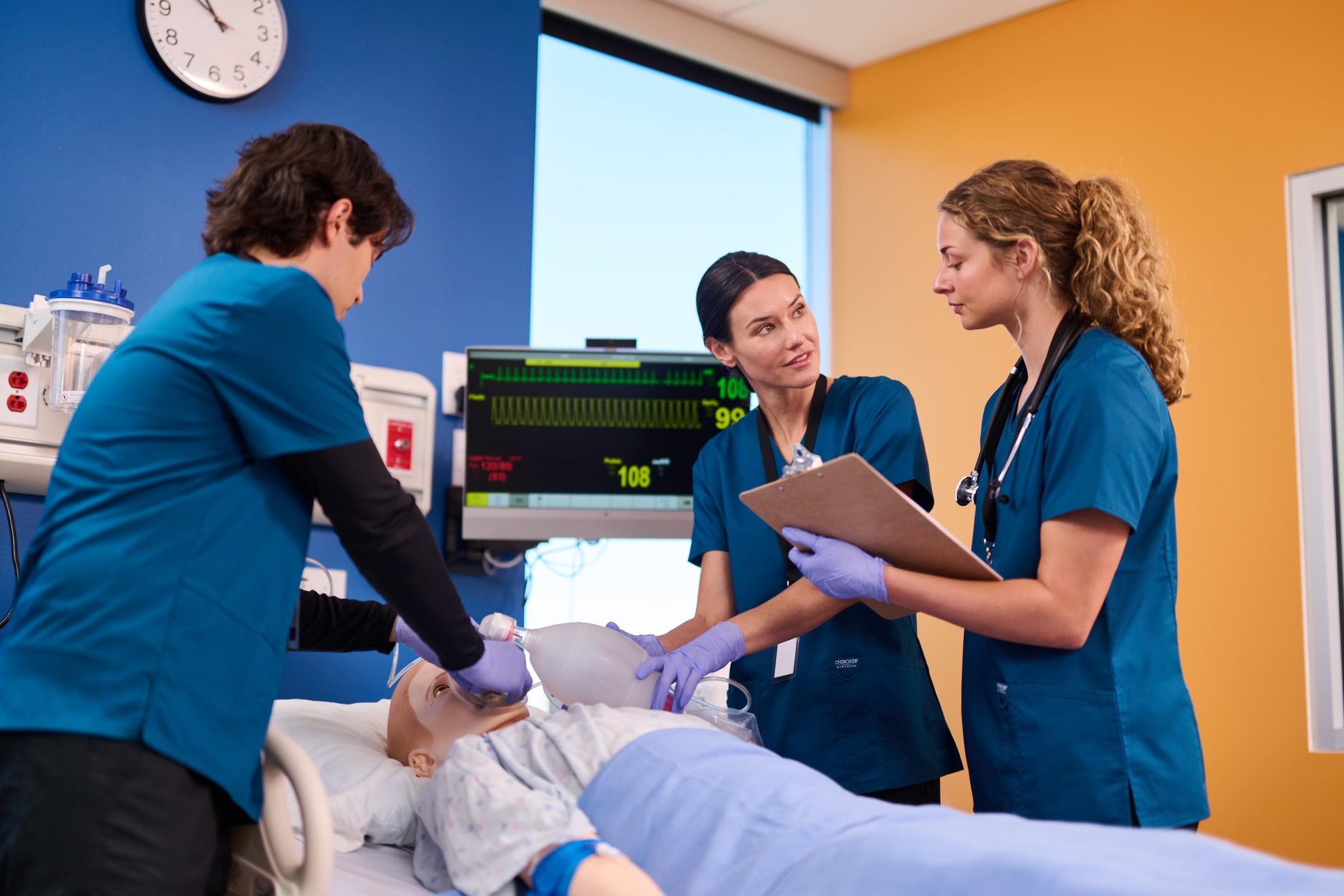
Master your skills in immersive labs
Our simulation labs and skills centers let you practice in a realistic, risk-free setting. Work with advanced manikins and modern equipment to refine your clinical decision-making and teamwork before you enter patient care environments.
Plan your path to affordable tuition
From grants and scholarships to flexible payment options, our Financial Aid specialists will guide you through every available resource. We’re here to help make your nursing education as accessible as possible.
Frequently Asked Questions
Tuition for the BSN program at Eagle Gate College varies by campus location and program track. Because costs may differ based on start date and enrollment status, your Admissions Advisor will provide a detailed cost breakdown outlining tuition, fees, books, supplies, and any additional program-related expenses. During this conversation, you will also review financial aid options available to those who qualify, so you clearly understand your estimated out-of-pocket costs before making your enrollment decision.
Eagle Gate College offers several financial aid options for those who qualify, including federal grants, federal student loans, and institutional scholarship opportunities. The process begins with completing the Free Application for Federal Student Aid (FAFSA), which determines your eligibility for federal aid programs. Our Financial Aid team will guide you step by step, explain your award package in detail, and help you understand repayment responsibilities so you can make informed financial decisions.
Yes. In addition to federal financial aid options for those who qualify, Eagle Gate College offers flexible payment arrangements to help make your nursing education more manageable. Depending on your financial situation, you may be able to establish a structured payment plan to distribute remaining tuition balances over time. A Financial Aid representative will work with you individually to review your funding sources, determine any remaining balance, and help you select a payment option that aligns with your financial goals.
We recommend completing your FAFSA as early as possible, ideally well before your program start date, to maximize your access to available funding. Submitting your FAFSA early allows sufficient time for processing, verification if required, and a thorough review of your eligibility for federal grants, student loans, and other aid programs for those who qualify. Early submission also helps prevent delays in packaging your financial aid and gives you ample time to review your award and plan confidently for your education.
Yes. Eagle Gate College evaluates official transcripts from accredited institutions to determine which previously completed courses may meet BSN program requirements. Transfer credit eligibility depends on course content, credit hours, and the grade earned. Each transcript is reviewed individually to ensure alignment with program standards and state regulatory requirements.
To determine transfer eligibility, submit your official transcripts for a complimentary evaluation. Once received, our Admissions team will coordinate a comprehensive review and provide a clear summary outlining which credits may transfer and how they apply to your degree plan. This process helps you better understand your potential timeline to graduation before enrolling.
Yes. Credits earned at Brookline College or Provo College may be eligible for transfer within the Unitek Learning network, provided the coursework meets equivalency and program requirements. Our team will carefully review your academic record to determine how previously completed courses may apply toward your BSN degree at Eagle Gate College.
If you have earned an associate degree in vocational or practical nursing and hold active licensure, you may qualify for an advanced placement pathway. This option is designed to recognize your prior academic preparation and clinical experience, allowing eligible coursework to be applied toward your Bachelor of Science in Nursing. By building on your existing foundation, this pathway can help reduce overall time to completion and support your transition from Licensed Practical Nurse to Registered Nurse more efficiently.
Applicants must provide proof of high school graduation or equivalent, meet minimum qualifying scores on the required entrance assessment, and complete an admissions interview. Before participating in clinical training, students must also pass a background check and drug screening in accordance with healthcare facility requirements. Additional documentation, including immunization records and health clearances, may be required prior to clinical placement.
No prior healthcare experience is required. The BSN program at Eagle Gate College is designed for students entering the nursing profession for the first time and provides comprehensive instruction in nursing theory, clinical skills, and patient care. The curriculum is structured to build knowledge progressively, from foundational concepts to advanced clinical practice.
Application fees may vary by campus location. Your Admissions Advisor will review any applicable fees with you at the beginning of the enrollment process and explain what is included so you fully understand all associated costs before submitting your application.
The BSN program at Eagle Gate College is delivered in a hybrid format. While certain general education and nursing theory courses may be offered online for flexibility, students are required to complete hands-on skills labs, simulation experiences, and in-person clinical rotations at approved healthcare facilities. Because nursing is a hands-on profession, clinical and on-campus training are essential components of the program.
Students can earn their Bachelor of Science in Nursing in as few as three years, depending on enrollment status, transfer credits, and pathway eligibility. This timeline allows students to enter the workforce sooner while still completing the comprehensive academic and clinical preparation required for RN licensure.
Eagle Gate College provides structured academic support throughout the nursing curriculum. Students have access to faculty coaching, tutoring, and review sessions across subject areas such as Fundamentals, Adult Medical-Surgical Nursing, Pharmacology, Maternal Child Nursing, Pediatrics, Mental Health, Community Health, Nutrition, Leadership, and Medication Math. Additional preparation resources are available to help students strengthen clinical reasoning and prepare for licensure examinations.
In addition to academic instruction and hands-on training, Eagle Gate College offers comprehensive student support services from enrollment through graduation and beyond. Students have access to financial counseling, academic tutoring, and learning resources to reinforce classroom success. The Career Services team provides resume development, interview preparation, employer networking opportunities, and job placement assistance to help connect students and graduates with meaningful healthcare careers. Alumni are welcome to return at any time for continued career guidance and advancement support.
A Bachelor of Science in Nursing (BSN) at Eagle Gate College is a comprehensive, hybrid nursing degree program that can be completed in as few as three years. It combines online coursework, on-campus labs, simulation experiences, and supervised clinical rotations to prepare graduates for Registered Nurse licensure. In addition to preparing students for the NCLEX-RN exam, the BSN curriculum builds leadership skills, clinical judgment, and a strong foundation in evidence-based practice.
Although there are multiple pathways to becoming an RN, a BSN provides expanded preparation in leadership, research, community health, and critical thinking. Many healthcare employers increasingly prefer or require BSN-prepared nurses, particularly in hospital and specialty settings. Earning a BSN can also increase eligibility for advancement, supervisory roles, specialty certifications, and graduate nursing education.
Students at Eagle Gate College complete supervised clinical rotations in hospitals, outpatient clinics, long-term care facilities, and community health settings. These experiences expose students to diverse patient populations and help build competency in medical-surgical nursing, maternal-child health, pediatrics, mental health, and community-based care. Simulation training further supports skill development in a controlled and supportive learning environment.
NCLEX preparation is integrated throughout the Eagle Gate College BSN curriculum. Students have access to ATI testing resources, practice assessments, remediation tools, and faculty-guided review sessions to strengthen clinical reasoning and test-taking strategies. Ongoing mentorship helps ensure graduates are academically prepared and confident when sitting for the NCLEX-RN examination.
According to the BLS, employment for Registered Nurses is projected to grow 5 percent from 2024 to 2034, faster than average for all occupations.
Yes. BSN-trained nurses generally earn higher salaries and have more career advancement opportunities compared to those with an associate degree. According to NursingProcess.org, the average salary of an RN with an associate degree is $80,660, while the average salary for a BSN holder is $92,560 per year. Salaries can vary depending on healthcare setting, geographic location, level of experience, and certifications.
Students participate in structured, scaffolded learning that progresses in complexity throughout the program. Lectures are designed to build knowledge step by step, reinforcing core concepts before advancing to more complex clinical content. Coursework begins with nursing fundamentals and continues through:
Beginning Medical-Surgical Nursing
Obstetrics
Pediatrics
Mental Health
Advanced Medical-Surgical Nursing
Critical Care
These environments are designed to mirror real healthcare settings and support hands-on learning in a controlled, supportive environment. All ground campuses are equipped with:
Dedicated simulation centers
High-, mid-, and low-fidelity mannequins
Virtual reality (VR) technology
Hospital-style skills laboratories
Students primarily train using Laerdal mannequins, available in low-, mid-, and high-fidelity models. These tools allow students to safely practice and refine specific clinical skills before working with live patients.
Fidelity level refers to the sophistication of the mannequin’s electronic components and its ability to simulate realistic human responses such as breathing, heart sounds, and physiological changes. In addition to full-body mannequins, students practice with specialized task trainers, including:
IV arms
Chester Chest™ central line trainers
Partial-body mannequins
Foley catheter insertion models
Wound care and ostomy trainers
BSN skills labs replicate hospital environments to help students build technical proficiency in a realistic clinical setting. Students have access to medical headwalls with simulated oxygen and suction, electronic vital signs monitors, EKG machines, defibrillators, hospital beds, medication carts, IV poles with IV fluids and Foley kits, chest tubes, splints and slings, sterile gloves and wound care supplies, as well as wheelchairs and crutches.
Virtual reality is used as a supplemental simulation tool to enhance clinical education. Through VR, students can:
Enter immersive patient-care scenarios on demand
Perform assessments and take vital signs
Administer medications
Practice communication and critical thinking skills
VR allows students to experience clinical situations that may not arise during scheduled clinical rotations. It provides a safe environment to develop both technical and interpersonal skills before caring for live patients. Students receive audio, visual, and tactile feedback throughout the experience, helping reinforce learning and build confidence.
Several features distinguish this program. These elements are designed to support diverse student backgrounds while maintaining strong clinical preparation and workforce readiness.
Asynchronous didactic coursework in the nursing core, offering added flexibility while maintaining academic rigor
Integration of virtual reality simulation to enhance clinical preparation
Multiple pathways to earn a bachelor’s degree in nursing in two to three years, depending on prior education
Tuition for the BSN program at Eagle Gate College varies by campus location and program track. Because costs may differ based on start date and enrollment status, your Admissions Advisor will provide a detailed cost breakdown outlining tuition, fees, books, supplies, and any additional program-related expenses. During this conversation, you will also review financial aid options available to those who qualify, so you clearly understand your estimated out-of-pocket costs before making your enrollment decision.
Eagle Gate College offers several financial aid options for those who qualify, including federal grants, federal student loans, and institutional scholarship opportunities. The process begins with completing the Free Application for Federal Student Aid (FAFSA), which determines your eligibility for federal aid programs. Our Financial Aid team will guide you step by step, explain your award package in detail, and help you understand repayment responsibilities so you can make informed financial decisions.
Yes. In addition to federal financial aid options for those who qualify, Eagle Gate College offers flexible payment arrangements to help make your nursing education more manageable. Depending on your financial situation, you may be able to establish a structured payment plan to distribute remaining tuition balances over time. A Financial Aid representative will work with you individually to review your funding sources, determine any remaining balance, and help you select a payment option that aligns with your financial goals.
We recommend completing your FAFSA as early as possible, ideally well before your program start date, to maximize your access to available funding. Submitting your FAFSA early allows sufficient time for processing, verification if required, and a thorough review of your eligibility for federal grants, student loans, and other aid programs for those who qualify. Early submission also helps prevent delays in packaging your financial aid and gives you ample time to review your award and plan confidently for your education.
Yes. Eagle Gate College evaluates official transcripts from accredited institutions to determine which previously completed courses may meet BSN program requirements. Transfer credit eligibility depends on course content, credit hours, and the grade earned. Each transcript is reviewed individually to ensure alignment with program standards and state regulatory requirements.
To determine transfer eligibility, submit your official transcripts for a complimentary evaluation. Once received, our Admissions team will coordinate a comprehensive review and provide a clear summary outlining which credits may transfer and how they apply to your degree plan. This process helps you better understand your potential timeline to graduation before enrolling.
Yes. Credits earned at Brookline College or Provo College may be eligible for transfer within the Unitek Learning network, provided the coursework meets equivalency and program requirements. Our team will carefully review your academic record to determine how previously completed courses may apply toward your BSN degree at Eagle Gate College.
If you have earned an associate degree in vocational or practical nursing and hold active licensure, you may qualify for an advanced placement pathway. This option is designed to recognize your prior academic preparation and clinical experience, allowing eligible coursework to be applied toward your Bachelor of Science in Nursing. By building on your existing foundation, this pathway can help reduce overall time to completion and support your transition from Licensed Practical Nurse to Registered Nurse more efficiently.
Applicants must provide proof of high school graduation or equivalent, meet minimum qualifying scores on the required entrance assessment, and complete an admissions interview. Before participating in clinical training, students must also pass a background check and drug screening in accordance with healthcare facility requirements. Additional documentation, including immunization records and health clearances, may be required prior to clinical placement.
No prior healthcare experience is required. The BSN program at Eagle Gate College is designed for students entering the nursing profession for the first time and provides comprehensive instruction in nursing theory, clinical skills, and patient care. The curriculum is structured to build knowledge progressively, from foundational concepts to advanced clinical practice.
Application fees may vary by campus location. Your Admissions Advisor will review any applicable fees with you at the beginning of the enrollment process and explain what is included so you fully understand all associated costs before submitting your application.
The BSN program at Eagle Gate College is delivered in a hybrid format. While certain general education and nursing theory courses may be offered online for flexibility, students are required to complete hands-on skills labs, simulation experiences, and in-person clinical rotations at approved healthcare facilities. Because nursing is a hands-on profession, clinical and on-campus training are essential components of the program.
Students can earn their Bachelor of Science in Nursing in as few as three years, depending on enrollment status, transfer credits, and pathway eligibility. This timeline allows students to enter the workforce sooner while still completing the comprehensive academic and clinical preparation required for RN licensure.
Eagle Gate College provides structured academic support throughout the nursing curriculum. Students have access to faculty coaching, tutoring, and review sessions across subject areas such as Fundamentals, Adult Medical-Surgical Nursing, Pharmacology, Maternal Child Nursing, Pediatrics, Mental Health, Community Health, Nutrition, Leadership, and Medication Math. Additional preparation resources are available to help students strengthen clinical reasoning and prepare for licensure examinations.
In addition to academic instruction and hands-on training, Eagle Gate College offers comprehensive student support services from enrollment through graduation and beyond. Students have access to financial counseling, academic tutoring, and learning resources to reinforce classroom success. The Career Services team provides resume development, interview preparation, employer networking opportunities, and job placement assistance to help connect students and graduates with meaningful healthcare careers. Alumni are welcome to return at any time for continued career guidance and advancement support.
A Bachelor of Science in Nursing (BSN) at Eagle Gate College is a comprehensive, hybrid nursing degree program that can be completed in as few as three years. It combines online coursework, on-campus labs, simulation experiences, and supervised clinical rotations to prepare graduates for Registered Nurse licensure. In addition to preparing students for the NCLEX-RN exam, the BSN curriculum builds leadership skills, clinical judgment, and a strong foundation in evidence-based practice.
Although there are multiple pathways to becoming an RN, a BSN provides expanded preparation in leadership, research, community health, and critical thinking. Many healthcare employers increasingly prefer or require BSN-prepared nurses, particularly in hospital and specialty settings. Earning a BSN can also increase eligibility for advancement, supervisory roles, specialty certifications, and graduate nursing education.
Students at Eagle Gate College complete supervised clinical rotations in hospitals, outpatient clinics, long-term care facilities, and community health settings. These experiences expose students to diverse patient populations and help build competency in medical-surgical nursing, maternal-child health, pediatrics, mental health, and community-based care. Simulation training further supports skill development in a controlled and supportive learning environment.
NCLEX preparation is integrated throughout the Eagle Gate College BSN curriculum. Students have access to ATI testing resources, practice assessments, remediation tools, and faculty-guided review sessions to strengthen clinical reasoning and test-taking strategies. Ongoing mentorship helps ensure graduates are academically prepared and confident when sitting for the NCLEX-RN examination.
According to the BLS, employment for Registered Nurses is projected to grow 5 percent from 2024 to 2034, faster than average for all occupations.
Yes. BSN-trained nurses generally earn higher salaries and have more career advancement opportunities compared to those with an associate degree. According to NursingProcess.org, the average salary of an RN with an associate degree is $80,660, while the average salary for a BSN holder is $92,560 per year. Salaries can vary depending on healthcare setting, geographic location, level of experience, and certifications.
Students participate in structured, scaffolded learning that progresses in complexity throughout the program. Lectures are designed to build knowledge step by step, reinforcing core concepts before advancing to more complex clinical content. Coursework begins with nursing fundamentals and continues through:
Beginning Medical-Surgical Nursing
Obstetrics
Pediatrics
Mental Health
Advanced Medical-Surgical Nursing
Critical Care
These environments are designed to mirror real healthcare settings and support hands-on learning in a controlled, supportive environment. All ground campuses are equipped with:
Dedicated simulation centers
High-, mid-, and low-fidelity mannequins
Virtual reality (VR) technology
Hospital-style skills laboratories
Students primarily train using Laerdal mannequins, available in low-, mid-, and high-fidelity models. These tools allow students to safely practice and refine specific clinical skills before working with live patients.
Fidelity level refers to the sophistication of the mannequin’s electronic components and its ability to simulate realistic human responses such as breathing, heart sounds, and physiological changes. In addition to full-body mannequins, students practice with specialized task trainers, including:
IV arms
Chester Chest™ central line trainers
Partial-body mannequins
Foley catheter insertion models
Wound care and ostomy trainers
BSN skills labs replicate hospital environments to help students build technical proficiency in a realistic clinical setting. Students have access to medical headwalls with simulated oxygen and suction, electronic vital signs monitors, EKG machines, defibrillators, hospital beds, medication carts, IV poles with IV fluids and Foley kits, chest tubes, splints and slings, sterile gloves and wound care supplies, as well as wheelchairs and crutches.
Virtual reality is used as a supplemental simulation tool to enhance clinical education. Through VR, students can:
Enter immersive patient-care scenarios on demand
Perform assessments and take vital signs
Administer medications
Practice communication and critical thinking skills
VR allows students to experience clinical situations that may not arise during scheduled clinical rotations. It provides a safe environment to develop both technical and interpersonal skills before caring for live patients. Students receive audio, visual, and tactile feedback throughout the experience, helping reinforce learning and build confidence.
Several features distinguish this program. These elements are designed to support diverse student backgrounds while maintaining strong clinical preparation and workforce readiness.
Asynchronous didactic coursework in the nursing core, offering added flexibility while maintaining academic rigor
Integration of virtual reality simulation to enhance clinical preparation
Multiple pathways to earn a bachelor’s degree in nursing in two to three years, depending on prior education
Accreditation
The baccalaureate degree program in nursing at Eagle Gate College is accredited by the Commission on Collegiate Nursing Education (http://www.ccneaccreditation.org/).
*These placement rates are based on program-specific and campus-specific data reported to our institutional accreditor(s) in 2024. While the figures shown here are not separately reported to our accreditor, they are derived from those outcomes. For full details by program and campus, please visit our Disclosures page.
*Please note that wage data provided by the Bureau of Labor Statistics (BLS) or other third-party sources may not be an accurate reflection of all areas of the country, may not account for the employees’ years of experience, and may not reflect the wages or outlook of entry-level employees, such as graduates of our program (accessed on 3/16/2026).